
Building and Grounds
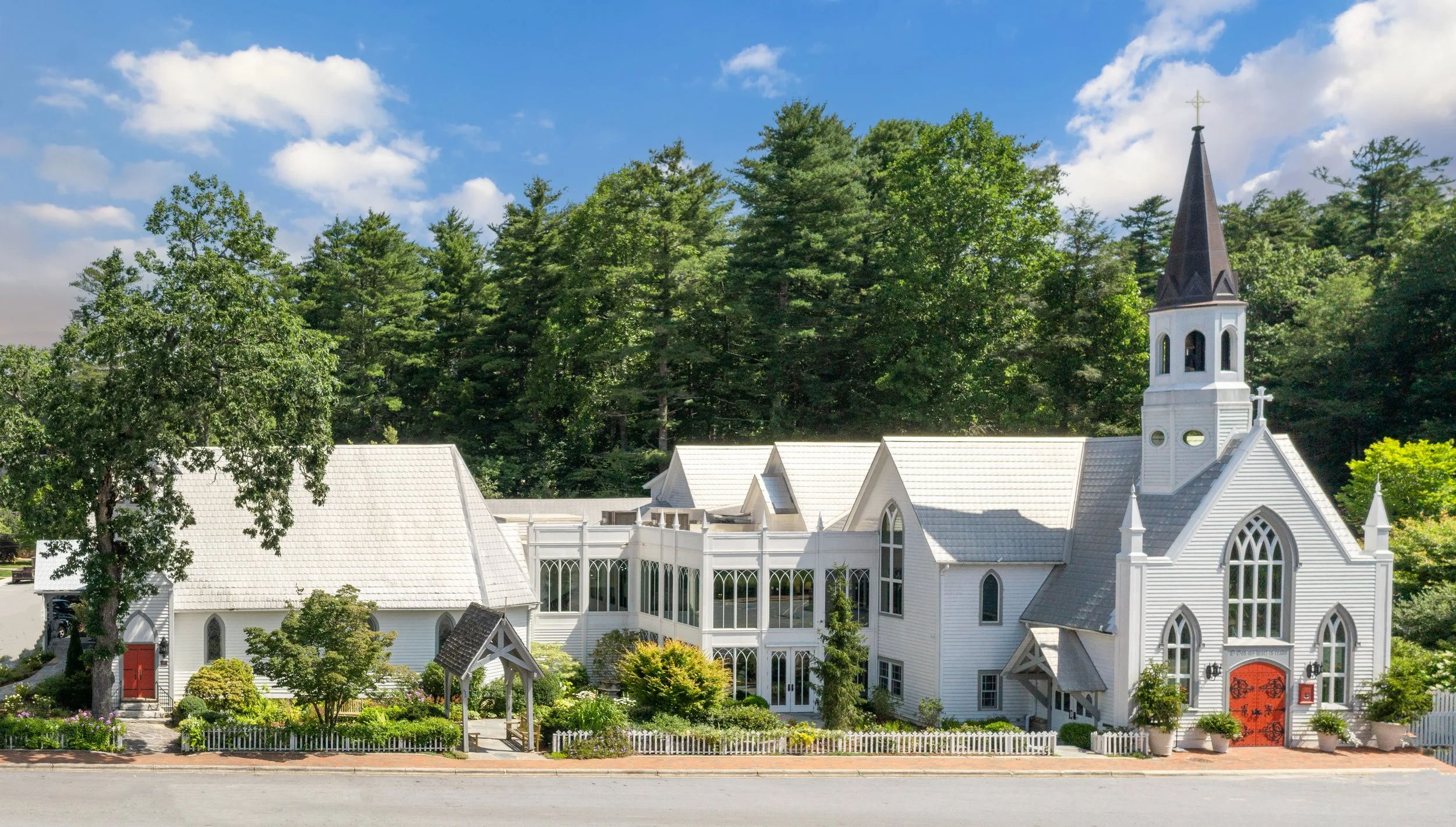
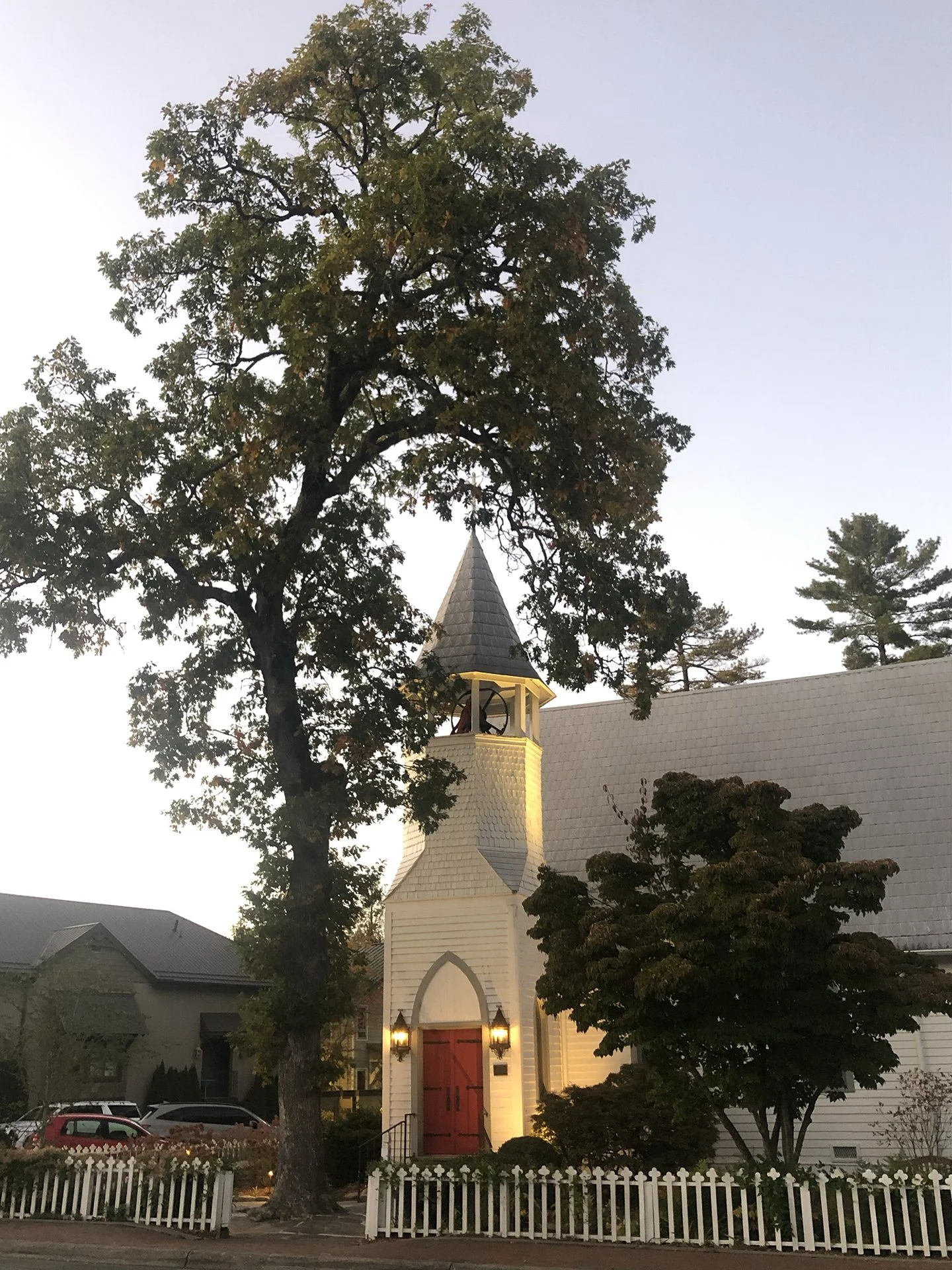
The Church of the Incarnation’s story begins with its original 1896 chapel, a textbook example of Carpenter Gothic architecture that has long been a visual landmark on Highlands’ Main Street. With its steeply pitched roof, lancet windows, and distinctive circular bell tower, the wood‑frame building embodies the Victorian Gothic Revival style favored by early Episcopal mission churches in the region. Though modest in scale—seating only about 100 worshippers—it proclaimed from its earliest days both the community’s theological convictions and its commitment to craftsmanship, qualities that earned it a place on the National Register of Historic Places in 1996.
As the parish grew, so did its facilities: in 2002 a new sanctuary was built to accommodate up to 240 people, along with offices, classrooms, meeting rooms, a library, a great hall, and modern amenities including an elevator for full ADA compliance.
More recently, in 2020 the congregation commissioned the Boston firm Cram & Ferguson to undertake a comprehensive renovation of both old and new spaces. Their work intentionally bridged the original Carpenter Gothic chapel and the later additions, creating a cohesive plan that would “illuminate, invite, and inspire” through improved sight lines, enhanced natural light, and a unified architectural vocabulary throughout the campus.
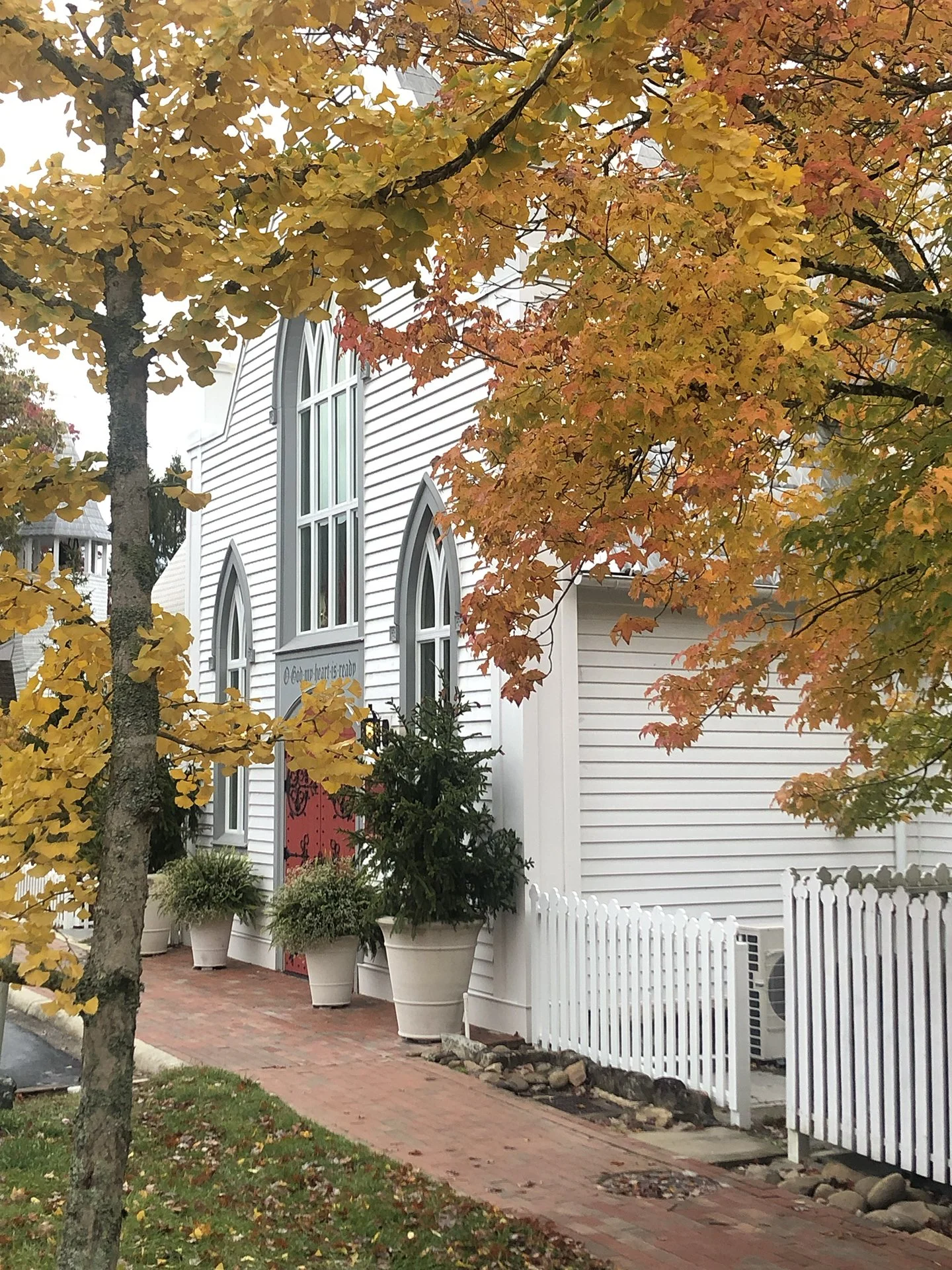
Central to Cram & Ferguson’s design was a respect for the church’s vernacular heritage even as they provided for contemporary worship needs. The chapel now links to the sanctuary via a glass‑lined corridor that floods both spaces with daylight, while new portals—most notably the richly lacquered red doors off Main Street—serve as both literal and symbolic thresholds into sacred community life.
Inside, thoughtfully integrated iconography and stained‑glass updates draw on Christian symbolism and local environmental motifs, reinforcing the sense that this is not merely a building, but a living temple open to all who seek solace, celebration, and renewal in the heart of our mountain town.
Church Garden
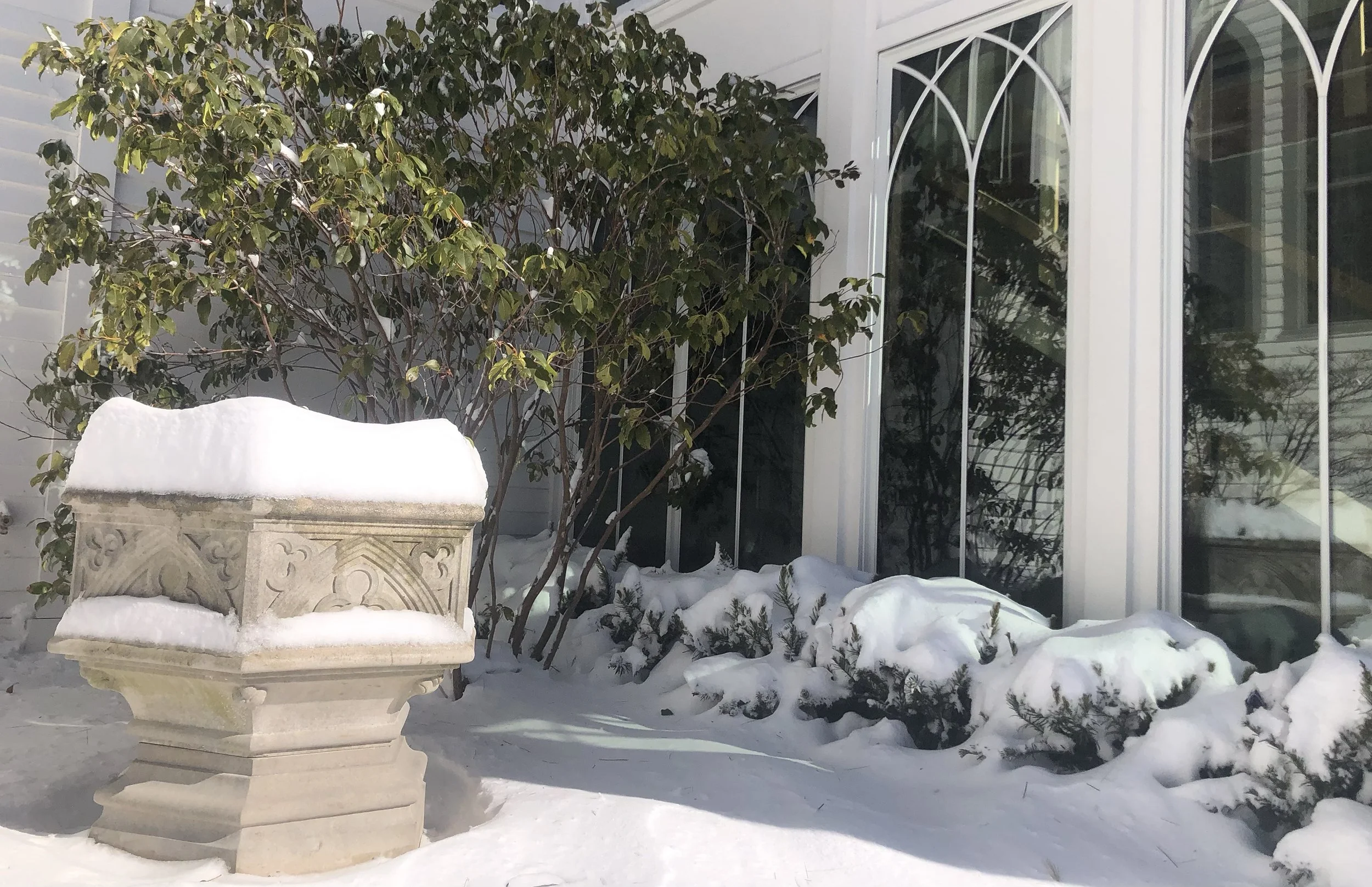
The garden at the Church of the Incarnation in Highlands, NC serves as both a locus of welcome and a living symbol for the parish’s life in Christ. Nestled adjacent to the chapel and main sanctuary, the winding paths and planting beds draw visitors into a gently unfolding sequence of vistas—each turn rewarding the eye with bursts of color, textural contrast, and moments of quiet reflection. Subtle elevation changes and a softly gurgling fountain create an immersive, multi‑sensory environment that beckons both the curious passerby and the devoted parishioner to pause and enter more deeply into prayer and contemplation.
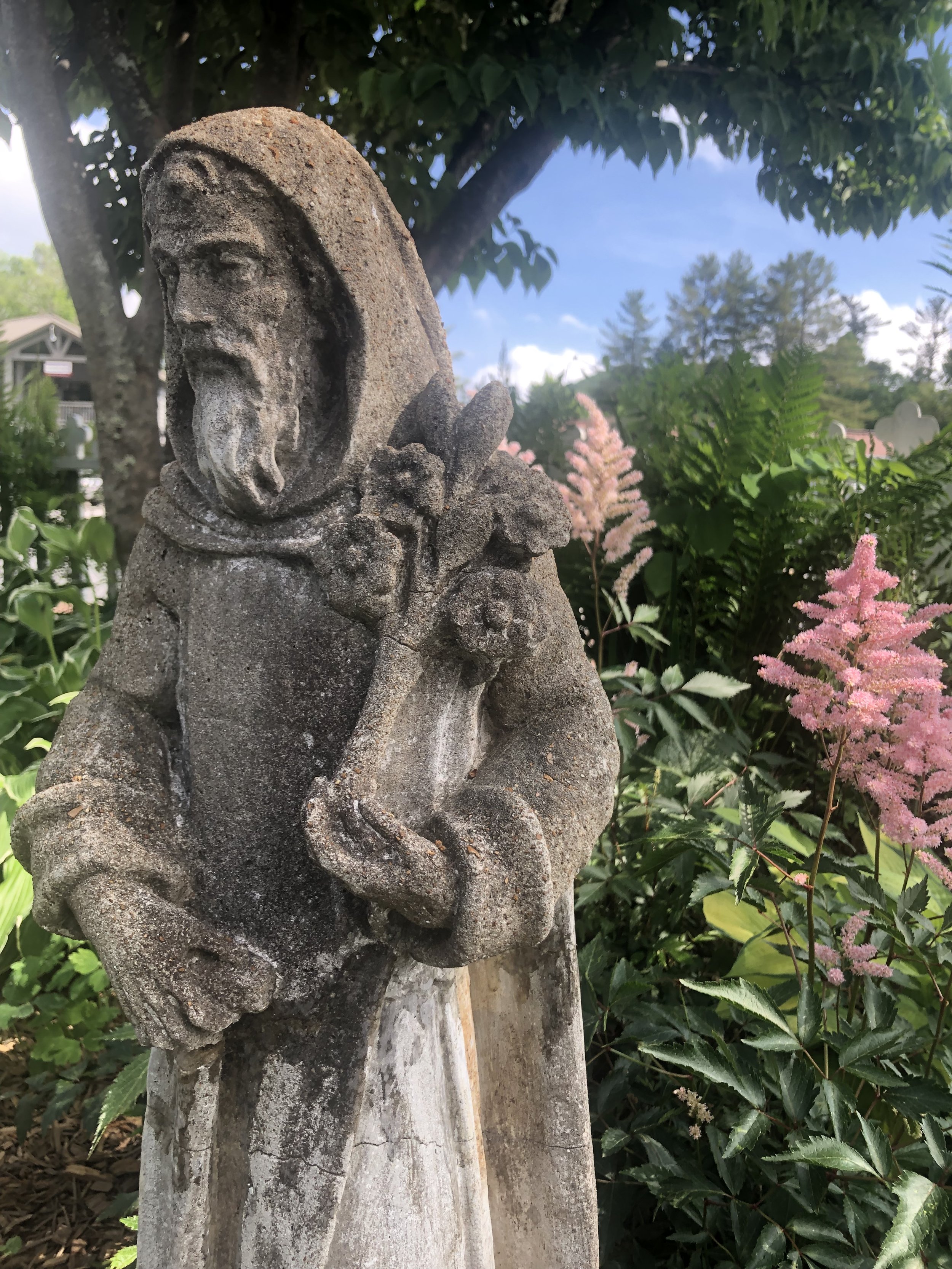
Beyond its horticultural appeal, the garden incorporates symbolic elements that connect the faithful to the longstanding traditions of the Church. A repurposed statue of Saint Fiacre—patron saint of gardeners—hints at our vocation to steward creation, while the fountain’s steady flow of water serves as a subtle reminder of baptismal grace.
Throughout the year, this thoughtfully layered landscape becomes a backdrop for the liturgical calendar: the fresh green shoots of spring herald resurrection hope; the vibrant midsummer colors mirror the joy of Pentecost; and the richly hued autumn blooms offer a fitting prelude to All Saints’ and All Souls’ commemorations. In every season, the garden stands as a testament both to the beauty of the created order and to the deepening life of prayer it inspires within our community.
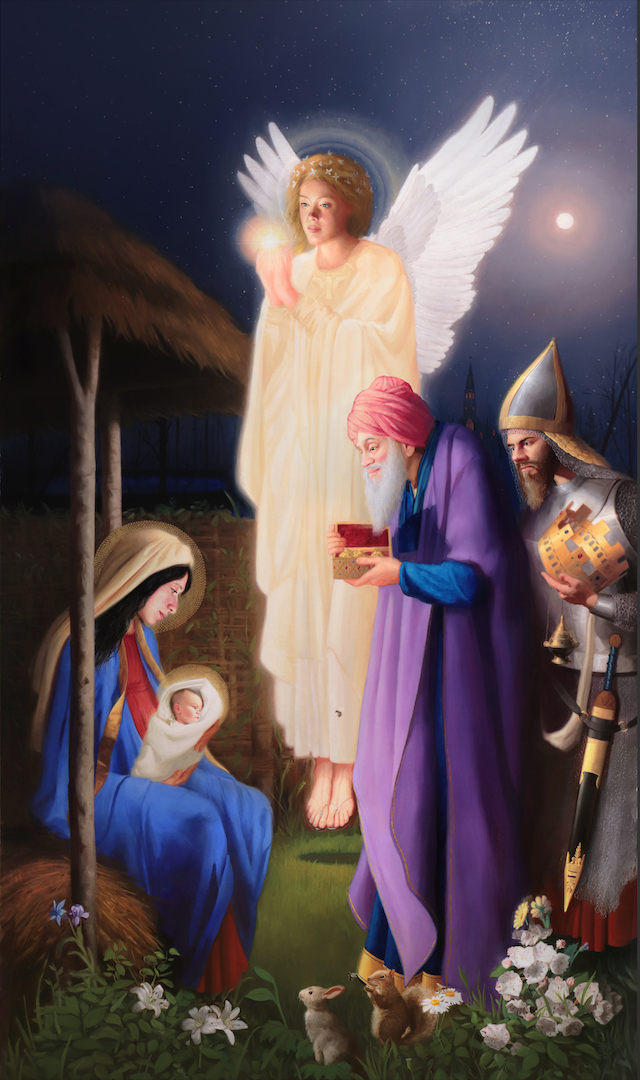
The Star of Bethlehem Altarpiece
The Star of Bethlehem altarpiece at the Church of the Incarnation was commissioned as a visual anchor for prayer, drawing worshipers into the mystery and beauty of the Incarnation. Painted by artist Eric Johnson, the piece takes inspiration from the Pre-Raphaelite tapestry of The Adoration of the Magi found in Exeter College Chapel at Oxford. Echoing the tapestry’s rich color palette, medieval stylization, and intricate symbolism, Johnson’s painting pays homage to the tradition of sacred art while offering a fresh, contemplative vision for today’s church.
At the center of the composition is the Christ child, quietly adored by the magi beneath the radiant star that gives the work its name. The figures are portrayed with both reverence and realism, inviting the viewer to dwell in the stillness and wonder of the scene. As in the tapestry that inspired it, the natural world—trees, flowers, animals—surrounds the holy family, reminding us that all creation bears witness to the mystery of God’s birth into the world. Commissioning this work was both an act of devotion and theological expression: a desire to proclaim in beauty that God has come to dwell with us, full of grace and truth..
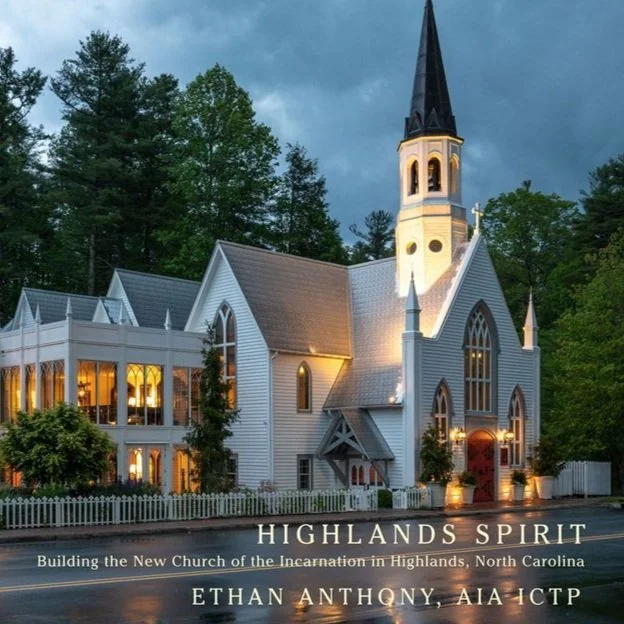
Highlands Spirit, lavishly illustrated with 77 color photographs, is the story of the transformation of the Episcopal Church of the Incarnation in Highlands, North Carolina. This photo book was assembled by Ethan Anthony, the Principal architect at Cram and Ferguson. It features essays by The Reverend Bentley Manning, Rector of the church and Matthew Alderman, chief designer at Cram and Ferguson, and photographs from Stephen Barling and the architects.
Highlands Spirit provides an example of a building program that preserves the essential spirit of the church that existed before the renovation yet also manages to unify an original 1896 carpenter gothic country chapel and three additions built in stages over the following century.
Order a copy of the book here.